Fifteen Seconds to Famous: How TikTok Audio Is Rewriting the Rules of Artist Discovery

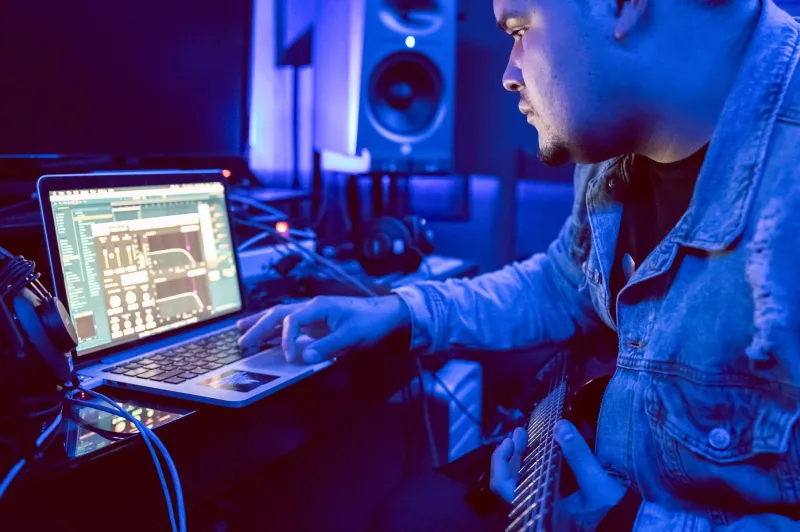
Photo by Photo by Collabstr on Unsplash on Unsplash
The Sound Before the Artist
Here's something wild to sit with: millions of people were already humming Ice Spice's "Munch" before most of them could tell you her last name. The beat hit TikTok's For You Page like a shockwave, soundtracking everything from thirst traps to cooking videos, and by the time the mainstream press caught up, she was already booked for late-night television. That's not a fluke — that's the new pipeline.
TikTok has fundamentally flipped how music discovery works. Radio used to be the gatekeeper. Then streaming playlists took that crown. Now, a 15-second audio clip — chopped, looped, and dropped into the app's infinite scroll — can do what years of label investment and press runs used to accomplish. The algorithm doesn't care about your publicist. It cares about what makes people stop scrolling.
What Makes a Sound "Stickable"
Not every song goes viral on TikTok, and the ones that do share some surprisingly consistent DNA. Producers and music supervisors who've watched this space closely will tell you the same things: a strong, distinctive hook in the first five seconds, a tempo that sits naturally under movement (dancing, pointing, lip-syncing), and an emotional register that's either extremely funny or genuinely aching. Ambiguity helps too — sounds that work across wildly different video contexts tend to spread further because more creators can actually use them.
There's also the "earworm gap" — a phrase some producers use to describe that brief moment of musical tension that makes a listener need to hear what comes next. Clips that end right before resolution rack up replays. Replays feed the algorithm. The algorithm feeds the FYP. And the FYP feeds careers.
Producers working in this space have started reverse-engineering tracks specifically for TikTok's consumption pattern, building what some in the industry call "FYP-first" records — songs designed to be experienced in fragment form before they ever exist as a full three-minute cut. It's a controversial approach, but it's undeniably effective.
The Artists Who Cracked the Code
Take Dasha, the country-pop artist whose song "Austin" became one of the most-used sounds on TikTok in late 2023. She wasn't fresh off a major label development deal or the product of a years-long promotional campaign. She was a creator who understood the platform, posted consistently, and caught a wave when her sound resonated with the app's massive base of country-curious Gen Z users. By the time Nashville was paying attention, her audience had already made the decision for them.
Or look at what happened with PinkPantheress, whose chopped-up, hyperspecific blend of UK garage and bedroom pop found a massive US audience almost entirely through TikTok. The brevity of her songs — most under two minutes — wasn't a limitation. It was a feature. Short songs loop better. Looping drives streams. Streams validate the algorithm's initial bet. The whole system reinforces itself.
Even more established artists have learned to play the game. Sabrina Carpenter's strategic deployment of short, quotable clips ahead of album cycles in 2024 showed that TikTok virality isn't just for newcomers — it's a tool that rewards anyone willing to meet the platform on its own terms.
Labels Are Playing Catch-Up
The major label system was built around a very specific discovery model: A&R reps scout talent, development deals get signed, radio promotion follows, and then — maybe, if everything breaks right — an artist connects with a mass audience. That process takes years and costs serious money. TikTok has compressed it into weeks and, in some cases, days.
Labels have adapted, but not always gracefully. Most of the big three now have dedicated TikTok scouting teams whose entire job is to monitor trending sounds and identify the artists behind them before competitors do. Some have gone further, partnering directly with creators and offering what are essentially "TikTok-first" deals that front load promotional resources toward the platform rather than traditional press.
But the tension is real. Artists who build their audiences organically on TikTok often have a level of direct fan connection that doesn't translate neatly into the label's traditional marketing framework. When your fans found you through a meme sound they remixed themselves, the relationship between artist and audience is fundamentally different than one built through curated press rollouts. Labels are still figuring out how to work with that — and some artists are deciding they'd rather not give them the chance.
The Independent Advantage
One of the most interesting dynamics in this new landscape is how it's leveled — at least partially — the playing field between independent and major-label artists. Distribution platforms like DistroKid and TuneCore mean that a track can be on every major DSP within 24 hours of going viral. A creator who wakes up to find their sound trending doesn't need a label infrastructure to monetize that moment anymore. They need a smart team, a clear head, and fast execution.
Artists like Jxdn, Tai Verdes, and a wave of others built substantial streaming numbers and touring bases before ever signing anything, precisely because TikTok gave them a direct line to fans that didn't require traditional gatekeepers. The platform doesn't care about your advance. It cares about your content.
What This Means for Music Going Forward
The TikTok discovery pipeline has real consequences for how music gets made, not just how it gets found. When a 15-second clip is the unit of cultural currency, the pressure to front-load hooks intensifies. Song structures are shifting. Intros are getting shorter. Choruses are arriving faster. Whether that's exciting creative evolution or a flattening of artistic ambition depends a lot on who you ask.
What's undeniable is that the next generation of superstars is already being built inside that app, one loop at a time. The algorithm doesn't sleep, and neither do the artists smart enough to understand that the stage isn't a venue anymore — it's a For You Page, serving a fresh audience every single second of every single day.
At KSou House, we've watched genre after genre find new life through this pipeline. Country, hyperpop, indie folk, Afrobeats — TikTok doesn't discriminate. Every sound has a shot. And right now, that feels like exactly the kind of chaotic, democratic energy that music needed.