Steal This Sound: Why the Next Generation of Producers Sees Sampling as Sacred, Not Stolen

Photo: 55158656@N06, CC BY 2.0, via Wikimedia Commons
Somewhere in the comment section of a viral TikTok sound — the one that's been used in 400,000 videos and spawned three different remixes and a hyperpop interpolation that somehow charted on Spotify — there's a teenager typing: who made the original? Nobody answers. Or rather, six different people answer, and they're all right.
This is the world we're living in now. And depending on who you ask, it's either the death of artistic integrity or its purest expression.
The Remix Has Always Been the Message
Before we get into TikTok and hyperpop and the legal gray zones, let's be honest about something: American popular music has always been built on borrowing, building, and transformation. Blues musicians borrowed from field hollers. Rock and roll borrowed from the blues. Hip-hop took that tradition and made the borrowing explicit — sampling wasn't a side effect of the genre, it was the methodology. The Amen break, a six-second drum loop from a 1969 funk record, has been sampled in thousands of songs across hip-hop, jungle, drum and bass, and beyond. It is, arguably, the most influential six seconds in recorded music history.
The idea that music exists in hermetically sealed units of original authorship is a relatively recent legal construct, not a cultural truth. Copyright law as it applies to music has been stretched, reinterpreted, and weaponized in ways its original architects couldn't have imagined. And the generation of artists coming up right now — the producers making beats in GarageBand, the hyperpop kids chopping vocals into unrecognizable textures, the TikTok sound designers who've turned a three-second audio clip into a global meme — they know this, even if they can't cite the case law.
TikTok as the World's Biggest Remix Studio
TikTok didn't invent remix culture. But it did give it an infrastructure and an audience that changed the stakes entirely.
The platform's sound system is genuinely fascinating from a music theory perspective. A user posts a video with an audio clip. That clip gets tagged, duplicated, repurposed, sped up, slowed down, layered over, and recontextualized across millions of videos. By the time a sound goes truly viral, it exists in dozens of mutated forms simultaneously. The "original" becomes almost a philosophical question.
What's striking is how often the creator of the original sound doesn't benefit from its viral moment — financially or even in terms of credit. Underground producers have watched their beats blow up on TikTok, drive streams to an artist's track, and generate real cultural capital, all while their own names never appear in the conversation. Some have spoken out about it publicly. Others have leaned into it, using the exposure to build their own followings and eventually negotiate better deals.
The platform has made some moves toward creator credit, but the mechanics are still imperfect. And the speed at which sounds mutate on TikTok means that attribution often gets scrambled before anyone even thinks to ask.
Hyperpop and the Art of Transformation
If TikTok is the distribution layer of this new remix culture, hyperpop is its most committed artistic philosophy.
The genre — if you can even call it a genre, given how deliberately it resists categorization — is built almost entirely on transformation. Pitched-up vocals, distorted 808s, samples that are chopped beyond recognition, production choices that treat every sonic convention as something to be shattered and reassembled. Artists like 100 gecs, Charli XCX in her more experimental modes, and the constellation of PC Music-adjacent producers have made transformation itself into the art form.
For this scene, the question of "originality" is almost a category error. The point isn't to make something from scratch — the point is to make something new from what already exists. That's a fundamentally different creative ethics than the one embedded in American copyright law, which still largely treats the original composition as the sacred object.
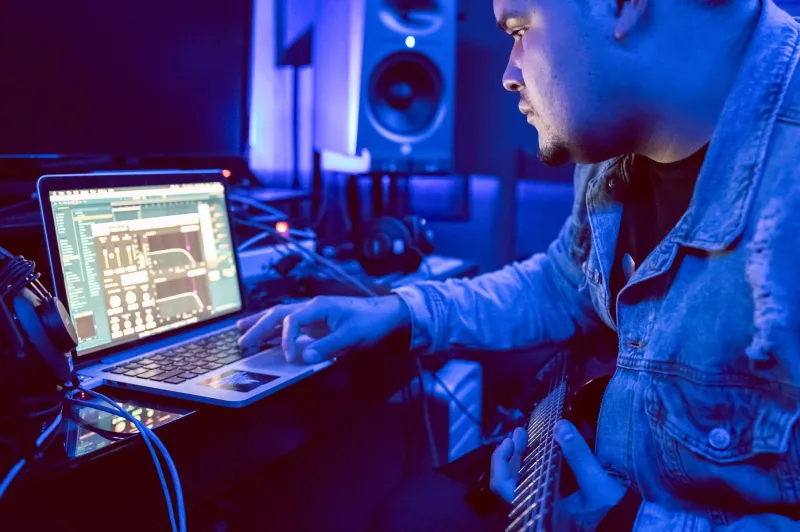
There's also something genuinely democratic about it. You don't need a million-dollar studio or a label deal to participate in hyperpop. You need a laptop, a DAW, and an internet connection. The barrier to entry is low, which means the creative pool is enormous, which means the rate of innovation is genuinely exciting.
The Legal Minefield Nobody's Cleaning Up
Here's where things get complicated. Because the cultural argument for remix culture as a legitimate art form is strong. The legal reality is considerably messier.
Sampling without clearance is technically copyright infringement in the US. The landmark case Bridgeport Music v. Dimension Films (2004) established that even a two-second sample requires licensing — a ruling that hip-hop producers still talk about with a kind of exhausted frustration. Clearance costs can run anywhere from a few thousand dollars to hundreds of thousands, effectively pricing independent artists out of a tradition that built the genre they're working in.
Interpolation — rerecording a melody or chord progression rather than using the original recording — exists in a slightly different legal zone, but it's not clean either. The Blurred Lines verdict in 2015, which found that Robin Thicke and Pharrell Williams had infringed on Marvin Gaye's "Got to Give It Up," sent shockwaves through the industry precisely because it seemed to extend copyright protection to feel and vibe rather than specific notes. If you can own a groove, what can't you own?
Younger producers navigate this by operating in spaces where enforcement is inconsistent. A beat posted on SoundCloud or used as a TikTok sound is unlikely to trigger a lawsuit unless it blows up to a scale that makes litigation economically worthwhile for the rights holder. That's not a legal protection — it's just a practical reality of how IP enforcement works. And it's a reality that can evaporate overnight.
Credit, Compensation, and the Ethics of the Chop
The legal question and the ethical question aren't the same thing, and it's worth keeping them separate.
Even in a world where remix culture is fully embraced and copyright law is reformed to reflect creative reality, there are still questions about credit and compensation that the community needs to answer for itself. Underground producers who create the sonic raw material that others build on deserve recognition. The soul singers whose voices get chopped into hyperpop textures deserve some share of what those textures generate. The lineage matters — not just legally, but culturally.
Some artists are genuinely thoughtful about this. Others aren't. And the speed of internet culture doesn't always leave room for the kind of careful attribution that would make the ethics cleaner.
The most honest version of this conversation acknowledges that sampling and remixing are legitimate, valuable, and historically grounded creative practices — and that they come with responsibilities to the people whose work you're building on. Those two things aren't in conflict. They're just both true.
The Future Sounds Like Everything at Once
Here's what feels undeniable: the music that's going to define this decade will be built on layers. It will borrow from everywhere, credit some of it, transform all of it, and exist in a dozen versions simultaneously across a dozen platforms.
That's not a corruption of music. That's what music has always done when the culture is actually alive and moving. The gatekeepers who want to freeze "originality" in amber are fighting a battle that American music history already settled — repeatedly, in favor of transformation.
The remix isn't a threat to the art. In a lot of ways, it is the art. The question is just whether the legal and economic infrastructure can catch up to what the culture already knows.