Run Your Own Thing: How Artist Collectives Became the New Cultural Authority in Music
For decades, getting heard in music meant getting chosen. You needed someone with a corner office and a Rolodex to decide you were worth the investment. That era isn't just fading — it's already gone for a growing number of artists who figured out a different way to move.
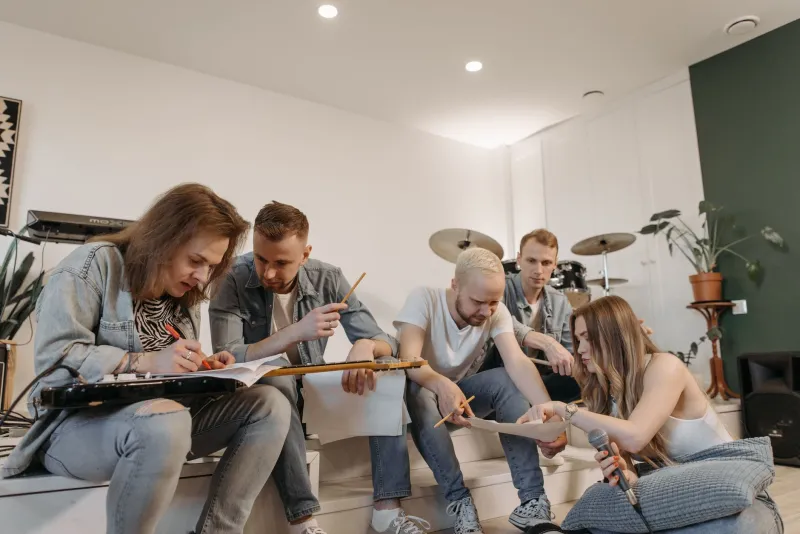
Artist collectives — tight-knit creative networks where musicians, producers, designers, directors, and engineers work together under a shared identity — have quietly become some of the most influential forces in American music culture. They're not waiting on label deals. They're building the infrastructure themselves.
What a Collective Actually Does
The word gets thrown around loosely, so let's be clear about what we're talking about. A collective isn't just a group of friends who follow each other on Instagram. It's a functioning creative unit where resources, aesthetics, and ambition are genuinely shared.
Think about what BROCKHAMPTON did in the mid-2010s. A crew of teenagers who met online — largely through a Kanye West fan forum, of all places — relocated to Los Angeles and started cranking out music, videos, and visual content at a pace that made traditional label rollout schedules look prehistoric. They didn't have an A&R rep greenlight their sound. They built their sound by being in the same room, constantly, and making decisions collectively. By the time the industry caught up to them, they already had a fanbase that was deeply loyal and culturally engaged.
That model — create together, distribute together, build an identity that's bigger than any one member — is what defines the collective approach.
The Infrastructure Shift
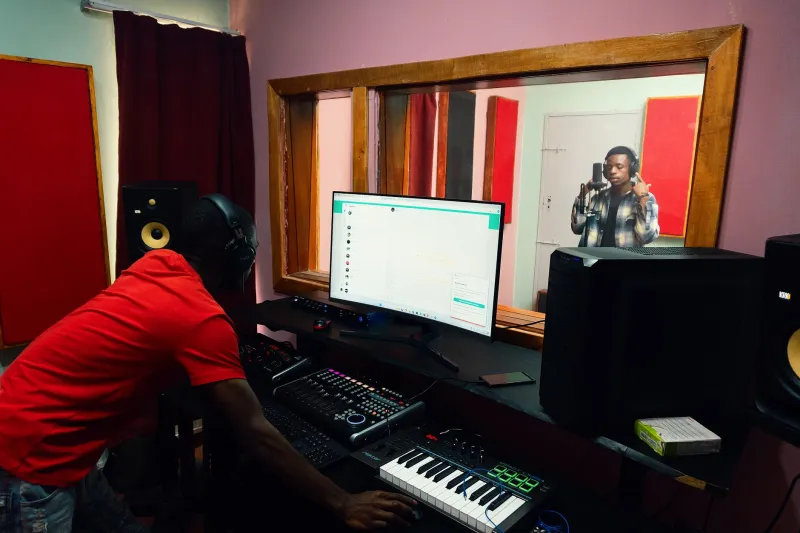
What makes this moment different from past eras of artistic community (and there have been plenty — think the Harlem Renaissance, the Brill Building, the Paisley Park era) is access to tools. A collective in 2025 can record, mix, master, shoot, edit, design, and distribute without leaving their city. Sometimes without leaving their block.
Digital audio workstations, affordable video gear, social platforms, and direct-to-fan distribution services have collapsed the cost of entry. When the price of making professional-quality work drops to near zero, the value of the gatekeeper drops with it.
This is exactly why Gen Z creators are drawn to the collective model. It's not just idealism — it's practical. Pooling skills means everyone gets more done. One person handles mixing, another handles visual direction, another manages the social presence. The result is a creative output that rivals what a full label team might produce, built on relationships rather than contracts.
Defining the Culture, Not Just Participating In It
Here's where things get interesting for anyone paying attention to how music culture actually moves. Collectives aren't just making music — they're setting the terms of taste.
When 100 gecs dropped their debut record, there was no radio push, no major press tour, no industry machine behind it. What happened instead was a slow-burn cultural moment driven almost entirely by a community of listeners who felt like they'd found something that was genuinely theirs. The hyperpop aesthetic that Laura Les and Dylan Brady were cooking up wasn't handed down from a label's trend report. It bubbled up from a network of online creators and listeners who were already operating outside of traditional taste structures.
That's cultural authority. And it doesn't come from a corner office anymore.
Collectives like Odd Future before them, or more recently groups like Slauson Malone's extended creative circle, or the interconnected web of producers and artists operating out of Chicago and Atlanta, are doing something similar. They're not asking for permission to define what's cool. They're just defining it, and the audience follows.
Artist Development, Redefined
One of the strongest arguments for the traditional label model was always artist development. Labels, at their best, invested in artists over time — paying for recording, coaching, styling, and strategic rollout. That takes money and infrastructure.
But collectives have found a different answer to that problem: community as development. Being embedded in a group of serious, motivated creators is its own form of growth. You get feedback in real time. You learn from watching how someone else approaches a problem. You're accountable to people who know your work intimately.
Some of the most compelling new voices in American music right now came up through exactly this kind of environment. They didn't need a label to tell them who they were as artists — they figured that out by making things with people they trusted.
That's not to say the collective model is without its challenges. Internal power dynamics can get messy. Credit disputes are real. When a collective member blows up individually, the question of loyalty versus independence gets complicated fast. BROCKHAMPTON's eventual disbandment was a public reminder that shared creative identity doesn't automatically mean shared longevity.
What This Means for the Broader Music Ecosystem
Labels haven't disappeared, and they're not going to. The major infrastructure — radio relationships, sync licensing, touring logistics at scale — still involves institutional players. But their cultural authority has been redistributed in ways that aren't coming back.
The real shift is in who gets to decide what matters. That decision used to flow downward from industry to audience. Now it flows in every direction at once. A collective in Detroit or Houston or somewhere in the Pacific Northwest can define an aesthetic that ripples outward and shapes what people are listening to nationally, without ever needing a single gatekeeping institution to validate it.
For listeners, that's actually a good thing. It means more genuine variety, more scenes, more sounds that come from real creative communities rather than market research.
The Stage Is Already Set
At KSou House, we're built on the idea that every genre and every artist deserves a platform. What the collective movement is proving is that artists agree — and they're building their own platforms when the existing ones don't serve them.
The gatekeepers aren't coming back. And honestly? The music is better for it. The voices getting through now are the ones who wanted it badly enough to build the door themselves.