Grooves Over Gigabytes: Why Gen Z Is Dropping Real Money on Records They Could Stream for Free
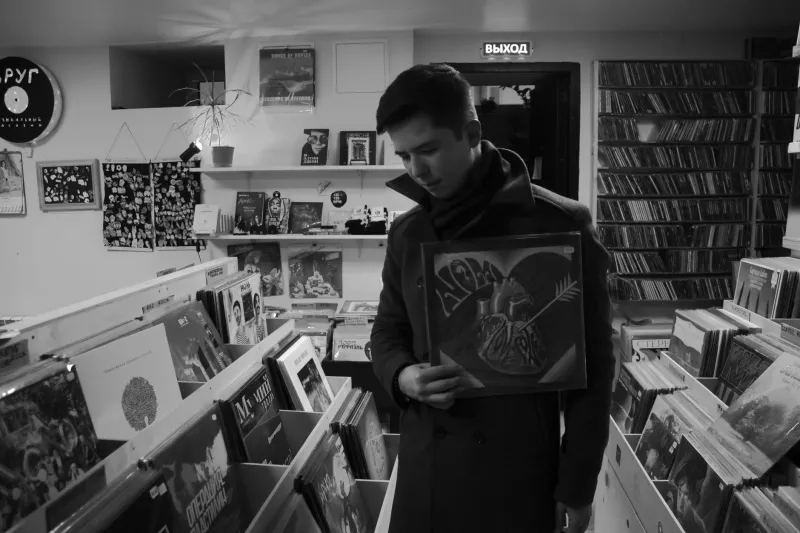
Here's something that shouldn't make sense on paper: a 22-year-old who grew up with Spotify, Apple Music, and a phone full of playlists is standing in a record store, dropping $35 on a vinyl copy of an album she could stream in about four seconds. She's heard maybe two songs from it. She doesn't own a turntable yet. And she's completely at peace with this decision.
This isn't a one-off. It's a full-blown cultural moment, and it's reshaping how the music industry thinks about physical media, artist revenue, and the way people actually want to connect with sound.
The Numbers Don't Lie (Even If They're Confusing)
Vinyl sales in the US have been climbing for over 17 consecutive years, but the recent spike has a distinctly younger face. According to the RIAA, vinyl generated over $1.2 billion in revenue in 2023 — outselling CDs for the second straight year. What's wild is that a significant chunk of those buyers are in the 18-to-28 demographic, a group that theoretically has zero reason to touch physical media.
Record stores that were written off as nostalgia traps a decade ago are now some of the busiest retail spots in college towns and urban neighborhoods. Amoeba Music in LA. Rough Trade in Brooklyn. Permanent Records in Chicago. These aren't just surviving — they're thriving, stocking shelves with both classic pressings and new releases from artists who understand that a vinyl drop is now a cultural event, not just a format choice.
It's Not About Sound Quality (At Least Not Entirely)
Ask a Gen Z collector why they buy records and you'll hear a lot of different answers, but the audiophile argument — that vinyl "sounds warmer" — is rarely the first thing out of their mouth. More often, you'll hear something like: "I actually listen to the whole thing."
That's the crux of it. Streaming made music frictionless, and frictionless turned out to have a downside nobody fully anticipated. When everything is available instantly, nothing feels precious. You skip tracks. You abandon albums after one song. You never sit with anything long enough for it to mean something.
Vinyl forces a different relationship. You have to flip the record. You have to clean it. You have to be in the room with it. For a generation raised on infinite scroll and skip-forward culture, that friction isn't a bug — it's the whole point.
Marcus, a 24-year-old in Atlanta who collects everything from Kendrick Lamar pressings to classic soul 45s, put it plainly: "When I put on a record, I'm committing. I'm not half-listening while I'm on my phone. It's like the difference between watching a movie in a theater versus having it on in the background."
Ownership in the Age of the Subscription
There's also something deeper going on around ownership — or the lack of it in modern digital life. When your music library lives inside a $10-a-month subscription, you don't own any of it. The moment you stop paying, it's gone. The moment the licensing deal expires, your favorite album disappears from the platform. That's happened enough times now that people have noticed.
Vinyl is the antidote to that anxiety. It's a physical object that sits on your shelf, that you can hold, that nobody can revoke access to. The album art is real. The liner notes are real. The whole thing is undeniably, permanently yours.
For a generation that's watched streaming platforms yank albums, shuffle catalogs, and quietly delete content, that kind of permanence carries real emotional weight. It's not nostalgia — it's a calculated response to the instability of digital ownership.
The Aesthetic Economy
Let's be honest about something else: records look incredible. A well-curated vinyl shelf is a statement, and in the visual economy of social media, that matters. Collectors on TikTok and Instagram have turned their shelves into content, and the ritual of unboxing a new pressing — the sleeve, the inner jacket, the actual record — plays beautifully on camera.
That might sound superficial, but it's actually doing something interesting for music culture. It's turning passive listeners into active participants. When you spend $40 on a record, you pay attention to it differently. You read the credits. You look at the artwork. You notice the sequencing. You become, in some small way, an advocate for that music.
Artists have caught on. Taylor Swift's vinyl variants — different colored pressings with exclusive photos and bonus tracks — turned record collecting into a fan experience strategy. Beyoncé, Tyler the Creator, SZA, and dozens of others have all leaned into elaborate vinyl releases that make the physical object feel like a collector's item from day one.
What This Means for the Music Economy
For independent artists especially, vinyl has become a meaningful revenue stream in a landscape where streaming payouts are notoriously brutal. A single vinyl pressing sold directly to fans through Bandcamp or a Shopify store can generate more revenue than hundreds of thousands of streams.
Small labels and self-releasing artists are now budgeting for vinyl runs the same way they'd budget for a music video — as an investment in how the music is perceived and how fans engage with it. Limited pressings create scarcity. Scarcity creates value. Value creates community.
Plant capacity hasn't kept up with demand, though. Pressing plants across the US and Europe are backed up by months, sometimes over a year. That's a real logistical headache for artists trying to time releases, but it's also a testament to how seriously people are taking this format.
More Than a Trend
It would be easy to write this off as a passing aesthetic phase — Gen Z's version of the Polaroid camera craze. But the sustained growth, the economic investment, and the genuine behavioral shift in how people are listening suggest something more durable.
Vinyl collecting, at its core, is a rejection of the idea that music is just content — a thing to consume and move past. It's a claim that some music deserves to be treated as an object worth owning, a ritual worth performing, an experience worth slowing down for.
In a culture that's drowning in instant everything, choosing to put on a record and actually listen might be the most radical thing a music fan can do right now. And Gen Z, for all the assumptions made about their attention spans, seems to understand that better than anyone.