No Press Pass Needed: How Musicians Learned to Tell Their Own Story
There used to be a very specific ritual. An artist would finish an album, their label would call in favors at the major outlets, and a journalist — sometimes sympathetic, sometimes not — would sit across from them in a hotel suite and decide what the world got to know. That journalist's framing could make a career or quietly bury one. The artist smiled, stayed on-message, and hoped for the best.
That ritual is basically dead.
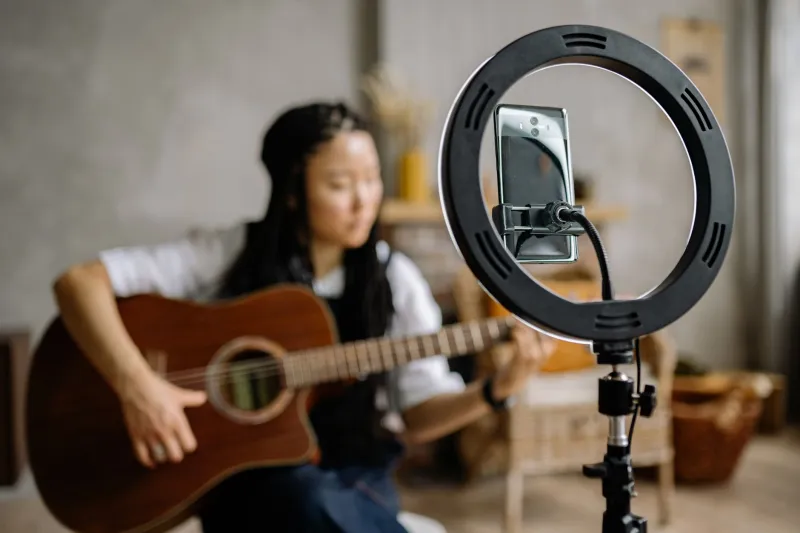
Today, the same artist might drop a voice memo explaining the album's concept to two million followers before a single outlet has even requested an interview. They might go live on TikTok from the studio at midnight, argue with a producer in real time, and have the whole thing clipped and discussed across the internet by morning. The intermediary — the critic, the editor, the publicist with the approved talking points — has been surgically removed from the equation.
The Old Guard and Why It Cracked
Traditional music journalism was never purely objective. Critics brought their own taste hierarchies, outlets had relationships with labels, and access was currency. A glowing Rolling Stone profile didn't happen by accident. Neither did a takedown. Artists understood this and mostly played along because there was no other game in town.
The internet didn't destroy that system overnight. It eroded it slowly, then all at once. Blogs chipped away at print authority. YouTube gave artists a broadcast channel. Twitter let them respond to criticism in real time without a publicist's filter. But social media — specifically the short-form, always-on, algorithmically driven version we live with now — finished the job.
What changed wasn't just the technology. It was the audience's appetite. Fans, particularly younger ones, stopped trusting polished profiles. They wanted the unedited version. The messy creative process. The 3 a.m. voice note. The frustrated rant about a label decision. Authenticity — or at least the convincing performance of it — became more valuable than any feature placement.
Raw Feed, Real Power
Watch how artists actually use these platforms and the strategic intent becomes clear pretty fast. Instagram Stories have become a running documentary of creative life — studio sessions, rough demos played into a phone camera, handwritten lyrics that may or may not make the final cut. It feels spontaneous. Some of it genuinely is. But artists and their teams have figured out that controlled vulnerability is its own kind of PR.
TikTok operates differently. The format rewards personality and unpredictability, which means artists who lean into unscripted moments tend to build deeper loyalty than those who treat it like a promotional billboard. A behind-the-scenes clip showing genuine creative tension — a disagreement over a bridge, a producer scrapping a beat that took days to build — lands harder than any press release. Fans feel like they're witnessing something real, and that feeling translates directly into investment in the artist's success.
Livestreams take it even further. There's something about the live format that strips away the performance of polish. Artists have used it to address rumors directly, explain career decisions without a PR intermediary, and build the kind of ongoing conversation with their audience that no magazine profile could ever replicate.
What Journalists Lost — and What They're Still Holding
It would be easy to write music journalism's obituary here, but that's not quite the full picture. What journalists lost is clear: they're no longer the primary conduit between artists and audiences. The exclusive reveal, the first-look interview, the authoritative take that shapes public perception — all of that has been diluted or outright replaced.
But criticism, real criticism, still does something social media can't fully replicate. Context. A great piece of music writing situates an album within a cultural moment, draws connections the artist might not even see, and offers a perspective that isn't filtered through the artist's own self-interest. That kind of work still matters. It just doesn't carry the same gatekeeping authority it once did.
The outlets that have survived this transition are the ones that leaned into that distinction — writing that adds something to the conversation rather than just reporting what the artist wants you to know. The ones that tried to compete with artists' own content on timeliness or access largely lost that race.
The Parasocial Trade-Off
Here's the part that gets complicated. When artists build direct relationships with fans through constant, unfiltered content, they're also building something that can become genuinely difficult to manage. Parasocial relationships — where fans feel a deep personal connection to someone who doesn't actually know them — aren't new to celebrity culture. But the intimacy of modern social media cranks up the intensity.
Fans who've watched hundreds of hours of an artist's Stories feel like they know them. They have opinions about the artist's relationships, their creative choices, their personal struggles. When reality diverges from the version they've constructed in their heads, the fallout can be brutal. Artists who've built their brand on radical transparency sometimes find that the audience they cultivated has a hard time accepting that there are still things they don't get to see.
The mystique question is real too. Part of what made certain artists genuinely iconic was the distance between them and the audience. There was room for projection, for myth-making. That space is harder to maintain when you're posting daily. Some artists have figured out how to preserve an air of mystery even within a social-first strategy — carefully choosing what to reveal and what to withhold. Others have given away so much that the parasocial relationship starts to feel more like a burden than an asset.
Who's Winning This Shift
The artists who've navigated this new landscape best aren't necessarily the ones with the biggest followings. They're the ones who've been intentional about narrative. They understand that every post is a data point in a larger story they're telling about themselves — their values, their process, their place in the culture.
Independent artists, in particular, have found this power shift genuinely liberating. Without label infrastructure or a publicist managing access, the ability to speak directly to fans isn't just a nice perk — it's a survival tool. Building an audience that trusts you, that feels connected to your work before a single outlet has covered you, changes the economics of an independent career in real ways.
For bigger artists, the calculus is different but the principle holds. The ones who treat social media as an extension of their artistic identity — rather than a marketing obligation — tend to build the kind of loyalty that outlasts any single album cycle.
The Story Isn't Over
The gatekeepers didn't just get fired. They got replaced by something messier, more democratic, and a lot harder to control — which is probably how it should be. Artists telling their own stories means more voices, more perspectives, and less dependence on a small group of tastemakers deciding what's worth your attention.
At KSou House, that's kind of the whole point. Every genre, every artist, one stage. The best thing about this moment in music culture is that the stage just got a lot bigger — and the artists are finally holding the mic.