The Crowd Is the Critic Now: How Comment Sections Took Over Music Journalism
There used to be a very clear chain of command in music. An artist dropped an album. A publication sent it to a staff writer or a trusted freelancer. That person listened, typed something up, and the verdict landed in front of readers who largely accepted it as the official temperature reading on whether something was worth their time. That system ran the culture for decades.
It doesn't run it anymore.
Somewhere between the rise of social media and the collapse of print advertising revenue, the gatekeepers got quietly escorted out of the building. In their place? A few hundred million people with phones, opinions, and absolutely no obligation to be polite about it.
From Pitchfork Scores to Pinned Comments
Ask anyone under 30 where they go to figure out how they feel about a new release and very few of them are going to say they pulled up a long-form critical essay. They're scrolling TikTok. They're reading the replies under the artist's announcement tweet. They're checking the r/hiphopheads thread or whatever subreddit owns that genre's online real estate.
This isn't a knock on traditional music journalism — plenty of excellent writers are still doing important work. But in terms of raw cultural influence, the comment section has lapped the byline. A single viral take from an anonymous listener with 800 followers can shape how millions of people receive an album before a single professional review hits the internet. That's a seismic shift in how taste gets made.
When Beyoncé dropped Cowboy Carter, the discourse didn't wait for critics. Fan communities on X (formerly Twitter) had already broken down every sample, every lyrical callback, every piece of album art symbolism within hours. By the time legacy publications ran their takes, the conversation had already been had — in public, at scale, by people who weren't getting paid to have it.
Why Fans Hit Different
Here's the thing about fan criticism that traditional music journalism often underestimates: it's frequently more emotionally honest. Professional critics operate inside a framework of craft and context that, while valuable, can sometimes create distance from the raw experience of just listening to something and having feelings about it.
The person in the comments who writes "this album saved my life this year and I will not be taking questions" isn't doing criticism in the academic sense. But they're doing something real. They're documenting the actual human impact of music in a way that a 7.8 out of 10 rating simply cannot.
At the same time, fan discourse has developed its own sophisticated vocabulary. Reddit threads on music production regularly go deep on arrangement choices, mixing decisions, and compositional structure. Twitter stans have become expert at tracking an artist's thematic evolution across a discography. The tools are different, but the engagement is often just as serious.
The Accountability Shift
This new critical landscape isn't just about praise, though. It's also become a powerful mechanism for holding artists accountable in ways that traditional media often failed to do — or did slowly.
When an artist says something problematic, gets caught in a contradiction, or releases work that feels like a betrayal of their audience, social media doesn't wait for an editorial meeting. The response is immediate, loud, and often more nuanced than the mainstream media narrative that eventually follows. Fan communities have proven remarkably good at parsing context, debating intent, and reaching collective verdicts — sometimes more fairly than a single critic working on deadline.
That cuts both ways, of course. The same machinery that holds artists accountable can also manufacture outrage, pile on unfairly, or reduce complex situations to a trending hashtag. The crowd is powerful, but the crowd isn't always right. There's no editor in a comment section. There's no corrections policy on a Reddit thread.
The Streaming Audience as Cultural Authority
What's interesting is how the music industry has responded to all of this. Labels and artist teams have gotten extremely good at reading fan discourse in real time and using it to make decisions — which singles to push, which visuals to prioritize, which narratives to lean into or walk back. The comment section has become a de facto focus group that never stops running.
Artists themselves have adapted too. The ones who are thriving right now tend to be genuinely engaged with their audiences online, not in a performative way but in a way that treats fan commentary as part of the conversation rather than noise to be managed. Chappell Roan built a massive cultural moment partly because her audience felt like they were discovering her with her. Kendrick Lamar's ongoing relationship with his fanbase has always been built on the understanding that they're going to analyze every syllable — and he writes accordingly.
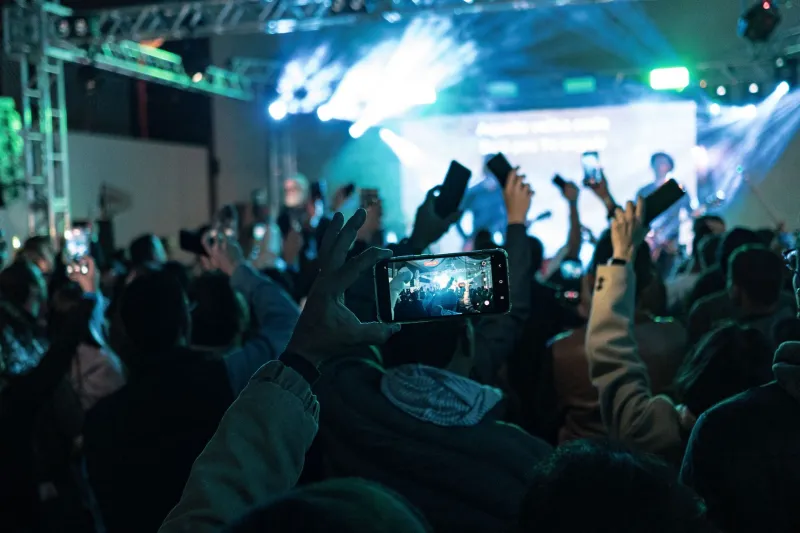
This is the new relationship between artist and listener. It's less broadcast and more dialogue. The stage is still there, but the audience has microphones now.
What Gets Lost, What Gets Found
It would be dishonest to pretend nothing valuable has been lost in this transition. Long-form criticism — the kind that situates an album within a cultural moment, traces its lineage, and makes a sustained argument about its meaning — is harder to find and harder to sustain financially. The economics of attention don't reward 3,000-word essays the way they reward a 15-second video of someone's genuine reaction.
But something has also been found. Music criticism used to be a pretty narrow conversation dominated by a pretty narrow group of voices. The democratization of opinion-making has brought in perspectives that were systematically excluded from legacy publications — regional scenes, genre communities, international influences, listeners from backgrounds that were never really reflected in mainstream music press.
At KSou House, we believe that every genre and every artist deserves a stage. The comment section, for all its chaos, has extended that stage further than any publication ever did. The challenge now is figuring out how to honor the depth of the old model while keeping the doors as wide open as the new one demands.
The Verdict Belongs to Everyone
Music criticism didn't die. It just got redistributed. The gatekeepers didn't disappear — they multiplied into millions of individual voices, each one carrying a fraction of the authority that used to be concentrated in a handful of institutions.
That's messier. It's louder. It's sometimes wildly unfair and sometimes startlingly insightful. But it's also more alive than it's ever been. And for artists trying to connect with the people who actually listen to their music, that might be exactly the right kind of chaos to exist inside.